
Repetitive Transcranial Magnetic Stimulation
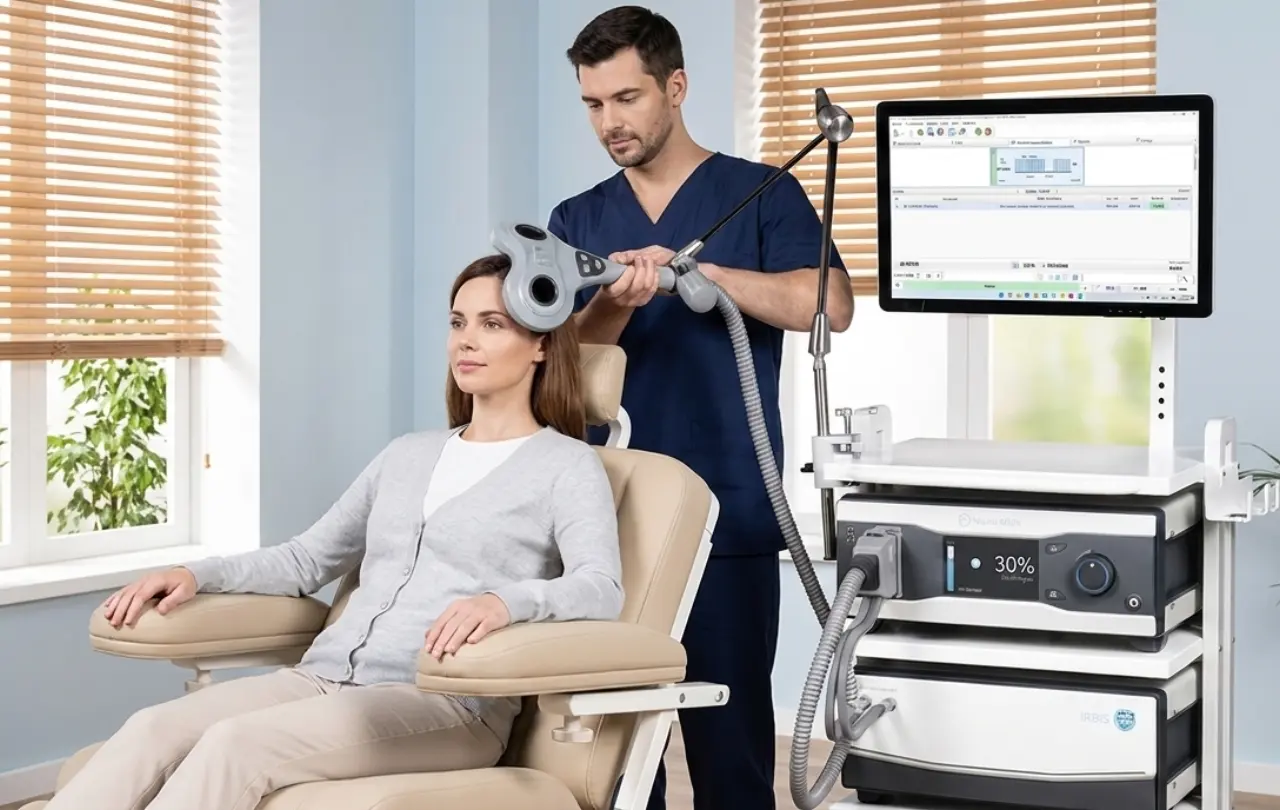
Repetitive Transcranial Magnetic Stimulation (rTMS), commonly referred to as TMS, is a TGA-approved, non-invasive treatment that uses gentle magnetic pulses to stimulate nerve cells in the brain regions involved in mood control. It is safe, effective, and requires no downtime.
TMS is most commonly used for treatment-resistant depression as well as for other conditions. Suitability is determined through an assessment with one of our psychiatrists, who will discuss whether TMS is the right option for you.
TGA-Approved
Medicare Subsidised
Why Choose TMS?
Non-Invasive
You remain fully awake during the session and can drive immediately afterward.
Favourable Safety Profile
TMS is considered a safe treatment when delivered by qualified clinicians.
Medication Independent
Ideal if you experience severe side effects from medication.
Well Tolerated
Most people experience minimal discomfort and only mild, temporary side effects.
Clinically Effective
Research has shown TMS can provide meaningful improvements for many patients, particularly those who have not responded to other treatments.
Personalised Treatment
Personalised treatment is tailored to your individual clinical needs, ensuring a treatment plan designed specifically for you.
Medicare Subsidised
Rebates are available for eligible patients experiencing treatment-resistant depression.
Who May Benefit from TMS?
Transcranial Magnetic Stimulation (TMS) may be suitable for individuals experiencing a range of neurological and mental health conditions, including:
- Depression
- Anxiety
- Obsessive-Compulsive Disorder (OCD)
- Post-Traumatic Stress Disorder (PTSD)
- Chronic Pain
- Tinnitus
- Medical and Neurological Rehabilitation
For conditions other than depression, TMS is generally delivered as part of a broader clinical treatment plan.
Referral Validity
Specialist referrals: 3 months • GP referrals: 12 months
Is it covered by Medicare?
- Rebates are available for eligible patients. Our psychiatrists oversee the clinic, and our administrative team will guide you through eligibility and the rebate process.
- Patients are eligible for rTMS treatment must fulfil the following criteria: Be an adult (≥18 years) diagnosed with major depressive episode; Have failed to receive satisfactory improvement in depression despite the adequate trialling of at least two different classes of antidepressant medications, unless contraindicated; Have also undertaken psychological therapy unless inappropriate; and Have not received rTMS treatment previously.
- Eligible patients will be able to receive an initial course of up to 35 rTMS treatment sessions subsidised on the MBS. In addition, if a patient has responded positively to the initial treatment course, but has subsequently relapsed, a retreatment course of up to 15 sessions will be available on the MBS. The Medicare rebate will be available to patients who have not previously undertaken a course of rTMS treatment services. Medicare rebates will be available for one single course of treatment and one course of retreatment services over a patient’s lifetime.
What Happens During Treatment?
Before treatment begins, you'll complete a comprehensive assessment with the Stirling Health Hub team, including screening and pre-consent appointments.
Obtain a referral from your GP, psychiatrist, or eligible healthcare provider.
Complete a screening call with our TMS team.
Attend a consultation with a TMS Specialist.
Begin your personalised treatment program.
Progress is reviewed regularly, with maintenance therapy recommended if clinically appropriate.
Frequently Asked Questions
The effects of TMS vary from person to person and depend on the condition being treated. Many patients notice improvements not only in their symptoms but also in overall wellbeing, daily functioning, sleep quality and quality of life. For chronic pain, benefits may last for several weeks, with periodic maintenance sessions helping to sustain results. For depression and other mental health conditions, TMS is most effective when combined with a broader treatment plan, which may include psychological therapy, medication, and lifestyle support.
TMS is safe and appropriate for many patients, but it is not recommended for people with certain medical conditions or metallic implants. Before treatment begins, our specialists at Stirling Health Hub conduct a comprehensive assessment to determine whether TMS is safe for you. It may not be recommended for people with:
- A history of epilepsy or seizures
- Metal implants or devices in or around the head and neck
- Deep brain stimulators
- Aneurysm clips or coils
- Metallic facial tattoos
TMS is generally well tolerated, with most side effects being mild and temporary. These may include:
- Mild headache
- Temporary scalp discomfort
- Rarely, seizures in people with an existing seizure risk
TMS works by stimulating targeted areas of the brain involved in pain processing. This can promote the release of the body's natural pain-relieving chemicals while influencing other neural pathways associated with pain. Treatment is tailored to the condition being managed and may also be used for tinnitus and certain neurological disorders.
A standard treatment course usually involves five sessions per week (Monday to Friday) for the best clinical outcomes. If this isn't practical, a minimum of three sessions per week may still provide benefit. Each session lasts approximately 15–20 minutes. A complete treatment course generally includes 30–35 sessions, although this may vary depending on your individual treatment plan.
No. TMS is performed as an outpatient procedure without anaesthesia or sedation. Patients remain awake throughout treatment and can usually drive home and return to normal activities immediately afterwards.
Booking Fee & Cancellation Policy
A $100 booking fee is required for all new patient appointments. This fee will be applied toward your appointment. If an appointment is cancelled with less than 24 hours' notice or is missed without notification, a $100 cancellation fee will apply. For new patients, the booking fee will be retained as the cancellation fee. If an emergency or illness prevents attendance, please contact us as soon as possible.